

While the Nature of Terrorism has Evolved, the Threat itself Remains Persistent
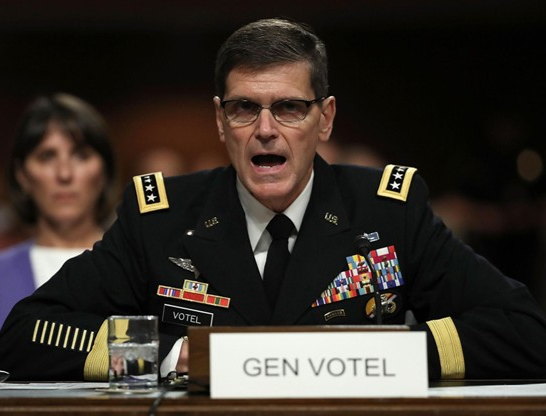
Source: U.S. House Armed Services Committee
Speaker: General Joseph L. Votel, U.S. Army, Commander, U.S. Central Command
Status: Public Domain (17 U.S.C. §105)
Editorial Note: The following is an excerpted and condensed version of official testimony. It has been organized for clarity and readability while preserving the meaning and integrity of the original remarks.
A Strategic Warning from the Front Lines
General Joseph L. Votel, then Commander of U.S. Central Command, delivered a sobering and strategic assessment of the global security environment before Congress. His testimony underscored a critical reality: while the nature of terrorism has evolved, the threat itself remains persistent, adaptive, and dangerous.
“The continuing threat of terrorism in and emanating from the CENTCOM region suggests that the United States cannot afford to remove our attention or our presence from this vital area.”
The CENTCOM region—spanning the Middle East, parts of Central and South Asia, and portions of North Africa—remains a focal point of global instability. It is here that extremist organizations have historically taken root, adapted, and, when left unchecked, expanded.
⚔️ The End of the Caliphate Was Not the End of the Fight
General Votel emphasized that while significant progress had been made in dismantling the territorial control of ISIS, the broader mission was far from complete.
“We have made significant progress against ISIS, but the fight is not over.”
The collapse of ISIS’s physical caliphate marked a major milestone, but it did not eliminate the ideology, networks, or ambitions of extremist groups. Instead, these organizations have shifted tactics—becoming more decentralized, more covert, and in some cases, more difficult to detect.
“The defeat of ISIS’s physical caliphate does not eliminate the threat posed by its ideology or its global network.”
🌍 A Region of Persistent Instability
The CENTCOM commander described a region marked by fragile governance, ongoing conflict, and conditions that extremist groups exploit.
“The region remains characterized by instability, conflict, and the presence of violent extremist organizations.”
In such environments:
Weak institutions create vacuums
Economic hardship fuels discontent
Extremist narratives find fertile ground
🛡️ The Importance of Sustained Engagement
“Our presence and our partnerships are critical to maintaining pressure on these organizations.”
The United States works closely with allies and partners to:
share intelligence
conduct coordinated operations
build local security capacity
“We work by, with, and through our partners to achieve our objectives.”
⚠️ The Risks of Premature Withdrawal
“When we withdraw prematurely, the threats to our homeland can grow more dangerous.”
History has shown that:
security vacuums invite resurgence
hard-won gains can erode quickly
adversaries adapt when pressure is lifted
“We have seen in the past that when pressure is removed, these organizations can reconstitute.”
🧠 The Evolving Nature of the Threat
The threat landscape has shifted significantly:
decentralized networks
lone actors
digital radicalization
“The threat has become more dispersed, more networked, and in many ways more difficult to counter.”
Protecting the Homeland
“Our efforts in the CENTCOM region are directly linked to the security of our homeland.”
Forward engagement reduces risk at home and remains a cornerstone of U.S. strategy.
📜 A Call for Strategic Patience
“This is a long-term effort that requires sustained commitment.”
The fight against terrorism is not defined by a single moment, but by continued vigilance, adaptability, and unity.
⭐ Closing Reflection
“We cannot afford to take our eyes off this threat.”
General Votel’s testimony reminds us that defending freedom requires both strength and clarity—and that unity of purpose remains our greatest national asset.
For Publication Note:
This material is derived from official U.S. government testimony and is in the public domain. It has been excerpted and formatted for clarity by the Veteran Legacy Network.


Comments